Showing posts with label Health and the family. Show all posts

Sunday, January 5, 2014

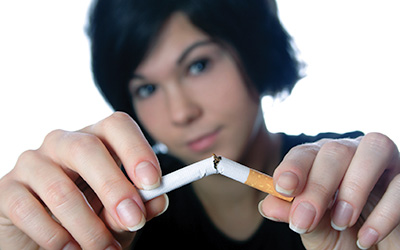
Give up Cigarettes and Gain No Weight

According to an article in Good Housekeeping Magazine, June 2010, giving up cigarettes doesn't have to mean gaining weight. Researchers from Northwestern University analyzed 10 studies involving 2,233 smokers, and found that those who watched the scale while quitting put on less weight (about 1.9 fewer pounds) after three months thant those who just cut out the cigarettes. Success in one area encourags more success in the other. So, attempting both at the same time not only could prevent dreaded weight gain, it could also up your chances of stopping smoking once and for all.

Monday, September 10, 2012

An Autism Advancement

Simple imitation exercises can help young children with autism boost their social skills, found a recent Journal of Autism and Developmental Disorders study.  After a series of treatments using the technique, kids made significant improvement in bringing their parent's attention to an object through gestures and eye contact.  If your child has autism, try this at least a few times a day.

Step 1: Pullout similar toys for you both to play with, such as tow stuffed animals or a couple of trains

Step 2: Watch your child's sounds and movements, and copy them.  If he/she makes her stuffed animal jump in the air, let yours do the same.  Continue this for one or two minutes.

Step 3: Switch roles and model something new to do with the toy, such as running the train up your leg.  Repeat this three times to encourage your child to imitate you.  If he/she does follow your movements, praise him/her and return to copying their actions.  If not, gently guide them through the imitation.

Sunday, September 9, 2012

Prevent Baby's Allergies

According to an article in the June 2012 issue of Parent magazine, if one parent has an allergy, chances are one in three that their child will too.  Below are ideas that may cut your child's odds of developing allergies:

1. Eat your "d": One Finnish study found that kids of women with a diet high in vitamin D during pregnancy were less likely to have asthma of allergies by age 5.  Your doctor can tell you whether you should add more D to your diet.  Some great sources: fortified orange juice, milk, and salmon.
2. Pop Probiotics:  Women who took them in their third trimester and then gave same supplement to their
baby for six months postpartum had newborns with blood markers that correlate with a lower allergy risk, one study found.  Ask your doctor about probiotics and which ones might be good for you both.
3. Avoid Cigarette Smoke: Studies show that moms who are cigarette smokers or regularly inhale secondhand smoke while pregnant are more likely to have children with respiratory allergies.
4. Choose a vaginal delivery: Researchers have found a correlation between cesarean section and childhood allergies.

Tuesday, September 4, 2012

Breakfast Benefits

What are some of the benefits of eating breakfast?  According to dietary guidelines for Americans, many children aren't getting enough calcium, vitamin D, potassium and dietary fiber, something a simple bowl of fiber-rich cereal with low-fat milk can provide.  Finally, people who eat breakfast are more likely to have a healthy weight than breakfast skippers.  Cereal is a nutritious option, according to Dayle Hayes, MS,RD, and one kids love to eat.  As a bonus, it fills that nutrient gap.  Many cereals contain whole grains that provide dietary fiber, and when combined with milk, you have got calcium, vitamin D, and potassium.  Also, most cold breakfast cereals are now fortified with a variety of nutrients, vitamins, and minerals that children need.

So, get out a bowl, spoon, cereal, and milk.  There is no need to skip such an easy option for breakfast and your kids will feel and perform better throughout the morning. 

Saturday, August 11, 2012

Fitness and Your Child

Regular exercise can promote overall good health, confidence and a positive self image for your child. According to Jeffery Crupi, owner of the Peak Fitness Gym in Westport, CT., it is important to promote a positive attitude toward physical fitness. When getting your child interested in a physical fitness program consider the following guidelines:

1. Make it enjoyable - Focus on fun activities
2. Introduce a variety - Introduce such activities as softball, soccer, tennis golf, swimming, skating, or whatever activities best suits their needs
3. Plan for success - To ensure your child succeeds, parents should encourage their child to create realistic and attainable fitness goals
4. Constant feedback - Feedback that is both verbal and nonverbal can go a along way in stimulating a child's participation in physical fitness
5. Role modeling - Being a positive role model can help influence a child's commitment to a fitness program

Sunday, July 22, 2012

The Simple Slim-Down For Kids

According to an article from the August 2012 issue of  Family Circle magazine, helping your child lose weight isn't as tough as you might think.  An adult requires a deficit of 500 calories daily to lose a pound a week.  Kids are luckier.  The average calorie gap for a child to slim down, by eating less or exercising more, is just 64, according recent research published by the American Journal of Preventive Medicine.  If U.S. youth can achieve that deficit, our childhood obesity rate would decrease from 16.9% to 14.6% by 2020.

Experts stress that your child's gap number is higher or lower; a doctor would calculate it based on your kid's height, weight, and activity level.  Still, changes are small and easy to make.  "I always tell parent, 'Never say never to a specific food,' "explains pediatrician Richard J. Deckelbaum, M.D., head of the Institute of Human Nutrition at Columbia University in New York. "It's about being portion smart."

How Safe Are Insect Repellent For Kids?


According to an article from August 2012 Family Circle magazine, DEET-based insect repellent is safe for kids.  As long as you follow some simple guidelines, "Buy a concentration that's less than 30%, says James R. Roberts, M.D., coauthor of the EPA's Recognition and Management of Pesticide Poisoning report.  A higher dose increases the chance of side effects.  "For most one-to-two-hour outings, 10% is going to be sufficient."

Avoid over-applying the spray, once daily should be enough, and never spritz on eyes.  hands or skin that will be covered.  Also, imperative: Make sure children shower off repellent before bed.  Parents wanting a more natural approach for kids (safe for those older than 3) should purchase a repellent containing lemon eucalyptus oil.

Saturday, July 14, 2012

Sweet Surprise


Sweet Surprise
According to an article in the July 2012 issue of Family Circle magazine, soda has become the biggest single source of added sugar in kids' diets.  But overall children still get more of the sweet stuff from food, a whopping 59%. 

The biggest culprits:
Treats eaten at home like cookies, doughnuts, candy and gum, followed by jellies, syrups and other toppings. 

 Fastest fix:
Cut back on the amount sugary snacks in your pantry.

Saturday, July 7, 2012

Protect Your Family's Food

According to an April 2010 article in "Better Homes and Gardens", food borne diseases from bacteria such as E.coli, and salmonella now cause 76 million people to fall ill each year. While several government agencies play a role in monitoring our food, most ow what we eat hasn't been tested before it reaches our plate. The good news is you can avoid most food-borne illness by taking easy, everyday precautions when you cook. Below are some suggest on how you can protect your family from food-borne bacteria:

1. Check expiration dates. Also, buy perishable that have been kept cold and have no obvious bruising or cracks.
2. Opt for local food. By local produce when you can. That is still no guarantee safe. No matter where you shop, pay attention when recalls are announced.
3. Wash you hands. About 20% of us don't remember to wash our hands or kitchen surfaces before preparing food.
4. Don't cross-contaminate. An example would be when bacteria from raw chicken travels to salad greens. Prep produce and ready-to-eat foods first, then handle raw meat or fish. Use separate utensils and cutting boards for each.
5. Clean those utensils. If you need to reuse a plate or knife after it touches raw meat, first clean it with hot soapy water.
6. Wash produce. Use running water and a vegetable brush to scrub firm types, like potatoes.
7. Defrost in fridge. Defrosting it in the fridge keeps the outside cold enough to inhibit the the growth of bacteria.
8. Test for doneness. You can't rely on 20/20 vision when it comes to killing bacteria. For example steaks and roast need to reach 145 degrees F; poultry should hit 165 degree F.

Saturday, June 23, 2012

Sweat More, Binge Less


Sweat More, Binge Less

According to an article in the June 2012 issue of Good Housekeeping magazine, shedding pounds often boils down to a simple equation: Eat fewer calories and burn more energy through exercise.  As it turns out, doing tone may help you do the other.  In a recent review, Harvard researchers proposed that exercise induces changes in the brain that could help you make better choices.  Your power over your drive to eat is controlled by an area of the brain that is under constant strain (think fast-food commercials or strolls by a bakery).  Exercise, however, may give those parts of the brain a boost, making it easier to turn down office birthday cake, explains study author Miguel Alonso-Alonso, M.D.

Sunday, June 10, 2012

Two new studies show that kids who watch movies depicting alcohol consumption are more likely to begin drinking or binge drink. Here are some tips to keep kids sober:

1. Know the Number.  Restrict the number of PG-13 flicks your tween can watch and R-rated movies your teen can see to three a week, even during the summer, advises James Sargent, M.D., a professor of pediatrics at Geisel School of Medicine at Dartmouth and an author of both studies.  In my opinion, I would make that once or week or not at all. 

2. Create Boundaries.  Make it clear that booze at their age is against the rules and will not be tolorated. Know their friends and monitor what your tween and teens are doing.  Let them know you are checking up on their activities and expect them to use good judgement.

3.  Model Behavior.  Enjoy the health benefits of alcohol.  You must be the example and don't drink or over indulge in drinking in front of your children. Remember they will do what they see.

Saturday, June 9, 2012

Kids and Sports Injuries

According to an article from the July 2012 issue of Family Circle magazine, practice makes perfect.  But kids who spend too much time training can be at risk for overuse injuries such as torn tendons and stress fractures.  Common in adults, these are now showing up in children.  "Parents and coaches are pushing kids at an earlier age, hoping they'll can become star athletes," says Stephen Rice, M.D., a pediatric sports medicine physician at Jersey Shore University Medical Center who coauthored recent guidelines for young baseball and softball players.  "Reduce your athlete's chances of getting hurt by watching out for:

1.  Pushy coaches - Kids can have trouble telling authority figures they're being worked too hard.  Check that your child isn't exhausted post-practice, losing motivation or experiencing lasting soreness.
2.  Too many teams - Let your child's coaches know about any other teams your child is on so they can adjust the workout accordingly, like having the child throw fewer pitches or swim fewer laps.
3. Sports camps - Kids in summer programs my drill five to eight hours a day.  This huge increase in activity doesn't allow them to slowly condition their muscles.  Ask the camp for a training schedule so your child can gradually ramp up the activity three weeks in advance.
4. Ignored injuries - Once pain gets intense, recovery takes longer.  Better for your child to rest before an injury starts to affect their performance instead of paying through it.  Explain to your kid the importance of telling the coach about pain and scaling back until they feel better. 

Sunday, June 3, 2012

Have It Your (Healthy) Way

A new line of lighter meals is now on the menu at Burger King, according to an article in the May 2012 issue of Good HouseKeeping.  Pick up a Snack Wrap, Ranch Crispy Chicken, or one of three hearty Garden Fresh Salads.  But to keep your choice figure-friendly (and the saturated fat down), you still need to order it your way:
1.  Eat the wrap as a meal (not a snack)
2. Have the salad with the tender grill chicken
3. Use just half a packet of dressing
Your meal will be 425 calories or less, so have it your (Healthy) way!

Sunday, May 27, 2012

Rock to Sleep

According to an article in the June 2012  issue of Good Housekeeping magazine, to sweeten your summer siesta, head for the hammock.  When scientist at the University of Geneva monitored the brain waves of nappers on two different days.  One experiment had the subjects sleeping in a stationary bed, the other as they rested in a bed that slowly swayed from side to side.  They found that rocking helped participants go from awake to fully asleep 3.5 minutes faster on average.  It also had a surprisingly powerful effect on brain waves, leading to more time spent in deep, restorative shut-eye. 

The reason:
The part of the brain that receives information on motion and balance is stimulated by a swinging motion, which may reinforce the types of waves characteristic of deeper sleep, say the authors.  And thanks to the sounder rest, hammock hours might boost performance and well-being while you're awake.

Monday, May 21, 2012

Tip #69: Make a Wellness Kit for the Winter Months at School.


With all the germs that are pasted around schools in the winter months, a school wellness kit is a good idea. That brings us to tip #69.

Tip #69: Make a Wellness Kit for the Winter Months at School.

Kids, especially adolescents, will have little complications such as hangnails or a lost contact lens can grow into a BIG DEAL! Sent your child to school with a wellness kit recommended by Dr. Kate Cronan, pediatrician and medical expert for http://www.kidhealth.org/ . Most everything will fit into a shaving bag or toiletry bag. Check with the school office for a list of exactly what is allowed with a child or in a locker.

Wellness Kit:
1. Hand sanitizer
2. Travel-pack of tissue
3. Lip balm
4. Throat lozenges
5. Breath mints
6. Band-Aids
7. Soft nail file
8. Travel-size deodorant
9. Nonperishable healthy snack (trail mix, protein bar, etc)
10. Sunscreen for field trips/recess

Sunday, May 20, 2012

Boys and Their Bodies

Boys and Their Bodies

According to Sanjay Gupta, a neurosurgeon and CNN medical correspondent, It is no secret that the impossibly thin fashion models glorified in magazines have made countless women and girls feel bad about their own bodies.  New research show that the muscle-bound hunks in TV and print ads can affect guys too.  Psychologist at the University of Central Florida studied 158 male college students, average age 21, and found that those who were shown TV commercials featuring fit, muscular, sometimes bare-chested men were more depressed and had more body dissatisfaction than students who watched neutral ads.  In fact, the latter group reported a decrease in depression after seeing the non-appearance-related ads.  Who says men and boys aren't sensitive?

Sunday, May 6, 2012

The Happiness Diet: Part 2

The Happiness Diet:
Part 2
According to an article on fitbie.msn.com, staying away from processed foods can have a positive effect on more than just your physical well-being

By Tyler Graham and Drew Ramsey, M.D.

Watermelon
The red flesh of watermelon is bursting with the powerful antioxidant lycopene, much more so actually than the tomato. Lycopene protects our skin from the intense summer sun and kills cancer cells. Studies show you can boost the levels of this important nutrient by up to 40 percent (and beta-carotene by 150 percent) by letting it sit outside the refrigerator at room temperature for several days.

Chili Peppers
Neuroscientists recently found that the brain is loaded with receptors for capsaicin, which is currently being investigated for its ability to regulate inflammation by influencing the expression of DNA. We also know that our brains respond to the heat of capsaicin by releasing endorphins, natural compounds that are related to morphine and have a calming effect. Capsaicin destroys carcinogens in our food like dimethyl nitrosamine, a preservative in cured meats, and vinyl carbamate, a cancer-causing agent in many pesticides. And capsaicin has been shown to protect the brain during liver failure. (13 Spices That Help You Lose Weight)

When we eat spicy foods, we release the same endorphins as when we exercise. Just like runners report a post-workout high, chile-eaters talk about a soothing, euphoric response to eating extremely spicy food.

Garlic
Garlic is the star of a family of vegetables known as alliums that include onions, garlic, and leeks. Alliums promote healthy arteries and ensure proper blood flow to the brain. These savory vegetables relax your blood vessels, decreasing your blood pressure, which prevents small strokes in the brain, a major cause of depression and dementia later in life.

Alliums are a top source of a key trace mineral for happiness known as chromium. It's needed for a proper response to the hormone insulin, which helps ensure you're not storing too much sugar as fat. But more than that, it influences the uptake of tryptophan, the precursor to the important neurotransmitter serotonin. It also enhances the release of the neurotransmitter norepinephrine. Chromium supplementation is effective in treating some depressed patients who struggle with low energy and carbohydrate craving. The more sugar in your diet, the more chromium your kidneys excrete, making it harder for insulin to function. Alliums lower blood sugar, and while we don't know exactly why, it may have to do with their high chromium content. Not only that, but the new science shows that allicin in garlic breaks up arterial plaques, essentially reversing heart disease. Garlic also thins blood, further protecting us from heart attack and stroke.

However you slice it, by adding garlic, onions, scallions, or any of the alliums to your daily diet, you'll be protecting your brain, lowering your risk of heart disease, and protecting yourself from the most common forms of cancer (especially of the mouth, throat, colon, and breast).

Saturday, May 5, 2012

The Happiness Diet: Part 1

The Happiness Diet:
Part 1


According to an article on fitbie.msn.com, staying away from processed foods can have a positive effect on more than just your physical well-being
By Tyler Graham and Drew Ramsey, M.D.

Wild Salmon and Shrimp
You've likely heard that fish is brain food, but you’ve likely not heard how wonderful it is for addressing funky moods. (Related: 6 Supersmart Seafood Choices) When studies compare the mood disorders in different countries, populations that eat the most fish have the lowest rates of depression, bipolar disorder, postpartum depression, and seasonal affective disorder (the winter blues).

These fats also seem to play a role in aggression. Young boys with lower levels of omega-3s have more temper tantrums and difficulty falling asleep.

Omega-3s have also been studies as a treatment for a variety of brain-based disorders. A 2008 study found fish oil to have equal efficacy to Prozac in the treatment of depression. Eating omega-3s has also been shown to alleviate the symptoms of depression in more than 60 percent of pregnant women.

Cherry Tomatoes
The same compound that makes tomatoes red, lycopene, helps maintain mood by preventing the formation of pro-inflammatory compounds (Search: What are pro-inflammatory compounds?), like interleukin-6, that are associated with depression. This magical molecule is also known to protect against a vast number of cancers (including breast, prostate, and pancreatic). In a study of elderly nuns, those with the most lycopene in their blood lived on an average a whopping eleven years longer than their sisters with the lowest levels. Organic tomatoes have three times as much of this molecule as conventionally produced ones.

Tomatoes are high in other mood enhancers like folate and magnesium, both used to treat depression. They contain iron, tryptophan, and vitamin B6: the main ingredients needed by your brain to produce important mood-regulating neurotransmitters like serotonin, dopamine, and norepinephrine. Add to this a high concentration of niacin, vitamin K, chromium, vitamin C, and potassium, and it makes sense that tomatoes protect us against choronic diseases like diabetes and heart disease. One way these nutrients work is by lowering homocysteine in the blood, a risk factor for depression, heart attacks, and strokes.

Tomorrow will be 3 more tips on the Happiness Diet

Sunday, April 29, 2012

Kitty Allergies

According to an article in the May 2012 issue of Good Housekeeping magazine, if your kids have other allergies it will make them three to four times more prone to react to a cat allergy.  A recent European survey of nearly 6,300 people were documented in this study.  But there is a solution:

1.  None of the kitty adoters who enforced a no-cat zone in their bedrooms became allergic, compared to 5% of those who gave Fluffy free run of the house. 

2.  Adults adopting cats were 40% less likely to become allergic if they'd had one as a child.

Sunday, April 22, 2012

Back Pain

According to an article in the April 2012 issue of Good Housekeeping, if the back pain won't quit, consider an alternative therapy.  Recent studies from the Group Health Research Institute in Seattle found that both Swedish massage and yoga significantly relieved chronic back pain.  After 10 treatments, of the 401 patients in the massage study, over 35% reported their pain was "gone"or "much better," compared with only 4% of those who continued with usual care.  Want a hand-off fix?  In another study, 12 yoga classes also brought relief, with 60% of patients reporting significant improvement.  Seek out a skilled practitioner or instructor, says senior investigator Daniel Cherkin, Ph.D.  For massage, try amtamassage.org.  With yoga, find a teacher who will make adjustments to help prevent injuries.

About This Blog

This weblog seeks primarily to be a resource to parents and their children facilitating, "Empowerment & Personal Responsibility through Education."

This weblog is an extension of BestEducationPossible-theCommunity an online community dedicated to Parents and their efforts to empower their children through Education.


How to get the Best Education Possible for Your Child

How to get the Best Education Possible for Your Child
Click Picture to Buy It Now!

Blogger templates made by AllBlogTools.com

Back to TOP