Tuesday, July 20, 2010

6 Key People to Meet At Your Child's School: Part II

Yesterday, we discussed 3 of the 6 people you should meet and introduce yourself to according to an article by Lisa Capretto. The 3 people were the principal, the school nurse, and the room parent. Today we will look at 3 more suggestions from Capretto.

1. PTA leaders: The PTA leaders are at the forefront of changing policies, improving schools, and taking action to give a voice to every child including your child. It is an important organization to become a member of. Getting to know the leaders will ensure that you know their annual objectives for the school and it is a way your voice can be heard. It is also a way to get involved and have volunteer opportunities at the school.


2. Guidance Counselor: The school counselor can help evaluate your child's academic and social development and can help your child in the time of trouble. The guidance counselor, in most cases, are involved in standardized testing and can identify any special needs issues. Another important reason to meet the counselor is she/he can help with any bullying situations that may arise.

3. School Bus Driver: If your child rides a bus to school it is important to introduce yourself to the driver. This is so the bus driver can make a connection between the both of you. Let the driver know you would like to be informed if there are any problems with your child.

The most important advice that I can give a parent is to become a positive partner in their child's education. Do not get involved with negative groups and don't participate in gossip. Make sure the principal, teachers, staff, and parents know you are there for support. It will make a difference in your child's education. To get more ideas on "How to Get the Best Education Possible" for your child, order my book, A Parent's Handbook: How to Get the Best Education Possible for Your Child K-6 Grades. You can order it at http://www.besteducationpossible.com/ .

Monday, July 19, 2010

6 Key People to Meet At Your Child's School: Part I

Lisa Capretto wrote an article and suggested that there are 6 key people you should meet at your child's school. According to the article you should set a time and day to meet each of these people to assure you and your child will have a smooth transition into the school year. Today, I will address the first 3 people to meet.

1. Principal: The principal runs the school and sets the tone and culture for the entire school. The principal solves problems, creates rules, polices the students, manages the staff, acts as mentor, evaluates classrooms, and most importantly, constantly communicates with everyone from teachers to parents to the school board. Find out if there is a meet the principal time or set up a small breakfast with some other parents and get to know the principal.

2. School nurse: You should meet the school nurse and inform him/her of any health conditions your child may have. You can also use the meeting to find out about any medications that need to be given during the school day and the policy and paper work for that. Ask about the school's health screenings (vision and hearing) and how to stay informed about health alerts throughout the school year.

3. Room parent: Get to know the room parent in your child's classroom. This is a great way to say informed and get more involved in the classroom. The room parent should know the upcoming events, projects, celebrations, and volunteer opportunities. If your child's classroom doesn't have a room parent, get to know at least one other parent in the classroom.
Tomorrow will be 3 more people Lisa Capretto suggest you meet at your child's school.

Sunday, July 18, 2010

Tweens Need More Sleep

Experts say tweens and teens need at least 8 to 9 hours of sleep a night, if not more. But only 20% of the 12 to 18 year old surveyed for a study published in Pediatrics reported sleeping 8 hours or more hours on school nights. What's keeping them up? Caffeinated energy drinks and too many electronic gadgets. Think phones, TVs, MP3 players, and computers, often all in the same room. What can you do? Christina Calamaro, Ph.D., the lead author of the study offers these tips:


1.Keep tech devices out of the bedroom. This is not just your child's room, your own as well. " This is an important thing to model," Calamaro says.

2. Encourage ( and again, model) good "sleep hygiene." Try to start winding down and that includes turning off the computer and TV and hour before bedtime if you can. Reading can help you and your child relax.

3. Know the difference between energy drinks and sports drinks. "Energy drinks are full of caffeine and sugar and have no purpose but to keep you awake," explains Calamaro. "Sports drinks are for replenishment after exercise or a game."

Saturday, July 17, 2010

Better Toothbrushes For Kids

According to an article in the December 2009 issue of Parents magazine, there are toothbrushes to help your child get the hang of brushing their teeth. The article cautions that your child will need supervision to brush properly until about 7 years old. Below are the suggested toothbrushes and prices:


Extra Power:
Every time your child brushes with the Sonicare for Kids, the power lasts a little longer until it hits 2 minutes. 4 years + $70, amazon.com


Super Scrubber:
When Dr. Fresh's Spider-Man Light-Up Toothbrush stops flashing after 60 seconds, move on to the next row of teeth. 3 years + $3, target.com


Double Duty:
The extra-long term of MAM's Training Brush lets you both grasp the handle. 6 months + $4, thesoftlanding.com

A another very important tip for parents is to teach your child to floss their teeth. It is as important as brushing the teeth.

Friday, July 16, 2010

Preventing "Brain Drain" This Summer: Part II

Yesterday I promised to give you more ideas on preventing "Brain Drain" this summer for your kids. You must keep your kids active physically and mentally during the summer break. Yesterday on, ABC Good Morning America, they stressed how research shows that students lose two months of math skills over the summer and will lose two to three months of reading fluency if there is no enrichment. Below are some more suggestions on how to prevent "Brain Drain" in Science.
Ectropy, ages 9-12
These kids allow kids to become miniature CSI analysts by combining chemistry and problem solving with good old-fashioned pretend play.

Heavenly Hair Kits, GiddyUp, ages 8+
This is another great product for girls who think science is a "boy" subject. It introduces experiments with a little biology and a little chemistry, but ti's all about hair. They will find out why hair's curly, why it's red or brown, why we need to wash it. It teaches kids how to make shampoo and conditioner, although you might want to test it out on the family dog before using the product yourself.

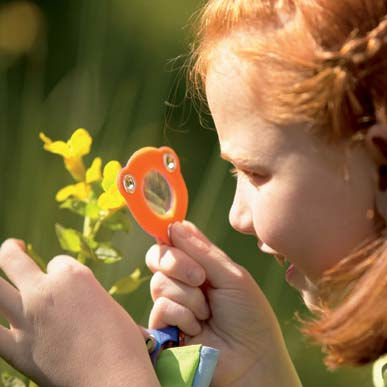
Magnifying Glass, ages 3+
Have your child use magnifying glass to investigate fingerprints, hairs, insects, rocks and other interesting objects. Have them write-up a describe their findings.

Cooking, ages 4+
Cooking requires lots of math skills like fractions, proportions, measurements, and counting how many cookies your can eat in an hour. It also requires science like chemical changes and physical changes.

For more objectives to prevent "Brain Drain" over the summer, purchase my book, "A Parent's Handbook: How to Get the Best Education Possible for Your Child K-6Th Grade", at http://www.besteducationpossible.com/.

Thursday, July 15, 2010

Preventing "Brain Drain" This Summer: Part I

A lot of kids have activities planned this summer like swimming and basketball. According to Ann Pleshette Murphy and Laura Zaccaro, studies show that students lose two months of math skills over the summer, and if kids are reluctant readers, getting them back into the swing of school can be painful for both of you.

I was watching "Good Morning America" this morning and saw that on their Web site, www.abcnews.com/gma, there are ideas to keep your child engaged in math and science over the summer. Below are some of the suggestions.
Math

Reptangles, Fat Brain Toys Co., ages 6+
Younger kids who like puzzles and older teens facing geometry class will love this toy.

Fantasy Sports
This is a great time for kids who love sports to join the league and draft team. This requires researching, averages, problem solving, using statistics, and crunching numbers.

Secret Ada, iPod/iPhone/iPod Touch, ages 12+
Math, science and technology are not just for boys. Kids have to use statistics and logic to decode the cryptograms, breaking the code unlocks the biography of a famous woman scientist or mathematician.

Math Gear Fast Facts, ages 7+
These are flash cards all dressed up. These fast facts sets allows kids to quiz themselves on basic multiplication and division by sliding new equations into place along a disc.

Web Takeway Math Tricks, ages 10+
This game incorporates math into chores and travel. For example, calculate how much chlorine needs to go into the pool given the pool's volume or calculate the mileage and estimate travel time of your upcoming trip.

For more objective your children need to practice over the summer, you can purchase my book, "A Parent's Handbook: How to Get the Best Education Possible K-6th Grades at, http://www.besteducationpossible.com/. Tomorrow I will post more ideas to prevent "Brain Drain" this summer. Check it out!!!

Wednesday, July 14, 2010

Playing By the Rules

Playing at the neighborhood playground is a proven way for children to blow off steam. It helps your child re energize so they can focus and be calmer later on in the day. According to Lynne Ticknor, M.A., a parenting consultant, these eight basic playground rules below, can teach your child the safety element while having fun.

1. Keep hands to yourself. No grabbing, pushing , pulling, pinching, or punching.
2. Use friendly language. Keep your volume down, and our tone of voice and word choice respectful toward peers, teachers, and parents.
3. Take turns. share playground equipment. Wait patiently until it's your turn to use the slide or monkey bars.
4. Swing straight. Sit forward with your bottom on the swing. Don't twist swings, jump off, or ride sideways.
5. Walk cautiously around swings and slides. Stay far away from the action so you won't get knocked over.
6. Play fair. Talk about problems with the other children or parents. Work together to solve playground squabbles.
7. Want to throw? Grab a ball. Not dirt, gravel, or rocks.
8. Going up? Use the ladder. Never walk up the slide. Go down feet first, face forward.

About This Blog

This weblog seeks primarily to be a resource to parents and their children facilitating, "Empowerment & Personal Responsibility through Education."

This weblog is an extension of BestEducationPossible-theCommunity an online community dedicated to Parents and their efforts to empower their children through Education.


How to get the Best Education Possible for Your Child

How to get the Best Education Possible for Your Child
Click Picture to Buy It Now!

Blogger templates made by AllBlogTools.com

Back to TOP